
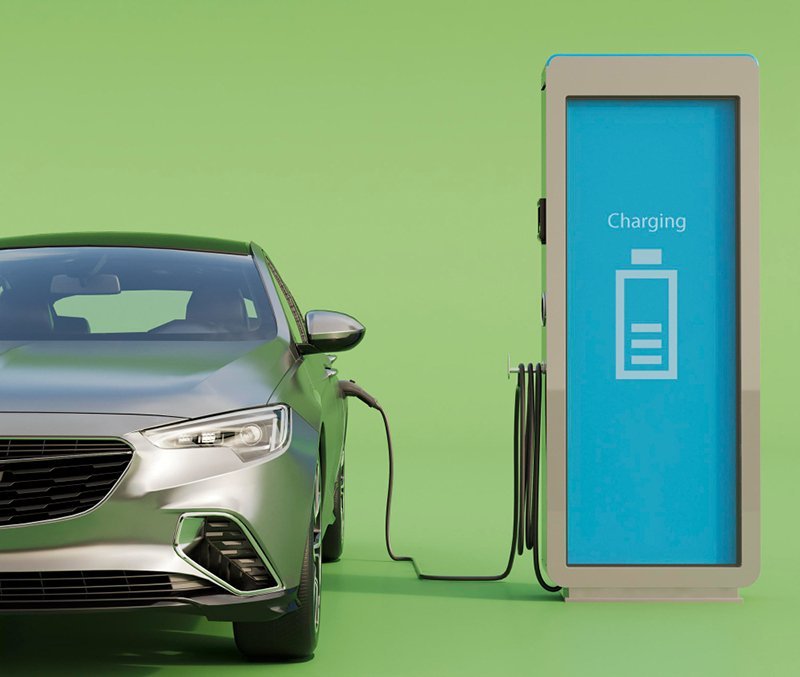
Electric Charging Station Conformity Approval Certificate
As electric vehicles (EVs) become more prominent in today’s transportation landscape, the infrastructure supporting them must evolve just as rapidly. One of the most critical elements of this evolution is ensuring the safety, functionality, and standardization of EV charging stations. To achieve this, manufacturers and suppliers must obtain a Conformity Approval Certificate — a formal document proving that a charging station complies with all necessary safety and performance standards.
As electric vehicles (EVs) continue to gain popularity worldwide, the need for reliable and standardized charging infrastructure becomes increasingly essential. One of the core components of building trust in EV charging is ensuring that each charging station complies with international and national standards. This is where the Electric Charging Station Conformity Approval Certificate plays a critical role.
This certification verifies that a charging station meets all necessary safety, technical, and performance criteria. It ensures that the station is suitable for public or private use and compatible with various EV models and energy systems.
Importance of Conformity Approval for Charging Stations
Obtaining a conformity approval certificate for an electric charging station is not merely a bureaucratic formality; it is an essential step for:
- Ensuring safety for users and electrical systems
- Guaranteeing interoperability between EVs and charging infrastructure
- Complying with governmental regulations and avoiding legal issues
- Enhancing consumer confidence and market competitiveness
- Enabling access to public tenders and infrastructure investments
Without proper certification, EV charging stations cannot be installed legally in many regions, nor can they participate in state-backed infrastructure projects.
Regulatory Framework and International Standards
Conformity assessment for EV charging stations is governed by both international standards and local regulations. While the specific requirements may vary by country, many nations align with widely accepted international frameworks such as:
- IEC 61851: Defines general requirements for EV conductive charging systems
- IEC 62196: Specifies connector types and communication protocols
- ISO 15118: Covers vehicle-to-grid (V2G) communication interface
- EN 50620: Focuses on EV charging cables
- UL 2202 and UL 2231: Applied in North America for safety compliance
Governments and standardization bodies often adapt these international standards into national legislation. Therefore, compliance ensures broader market access and easier international integration.
Certification Process Overview
Acquiring a Conformity Approval Certificate for an electric charging station typically involves the following key steps:
Application Submission
Manufacturers or suppliers must first apply to an authorized certification body. The application must include technical documentation, product specifications, circuit diagrams, and manufacturing process details.
Documentation Review
The certification body evaluates all submitted documentation to ensure it aligns with the applicable standards and regulations. This step helps identify any gaps or missing components early in the process.
Testing and Laboratory Assessment
A crucial step is product testing in an accredited laboratory environment. These tests assess various aspects of the charging station, including:
- Electrical safety and insulation
- Compatibility with EV connectors
- Communication protocols with EVs
- Resistance to environmental conditions (dust, water, temperature)
- Protection against overcurrent, short circuit, and grounding faults
- Electromagnetic compatibility (EMC)
Only after passing all these tests can a product move to the next phase.
On-site Inspection (If Required)
Some certification schemes may require factory audits or on-site inspections to verify quality control practices and consistency in manufacturing.
Certification Issuance
Once all requirements are met and test results are approved, the certification body issues the Conformity Approval Certificate. This document confirms that the charging station model complies with all specified norms and can be legally marketed and installed.
Common Types of Charging Stations Covered
Certification can apply to a range of EV charging stations, including:
- AC Charging Stations (Level 1 and Level 2)
- DC Fast Chargers
- Ultra-fast Charging Stations
- Wall-mounted or Pedestal Chargers
- Public and Private EVSE (Electric Vehicle Supply Equipment)
- Smart Chargers with Connectivity Features
Each type has its own specific testing and compliance criteria, depending on power output, usage environment, and communication protocols.
Key Benefits of Obtaining the Certificate
Market Legitimacy
Certification gives manufacturers and installers the legal permission to distribute and operate their equipment within a particular country or region.
Product Reliability
Certified charging stations must pass stringent testing, which ensures better performance, durability, and safety in real-world scenarios.
End-user Confidence
Users are more likely to trust and use certified chargers, knowing that they have met safety and interoperability standards.
Competitive Advantage
In a fast-growing market, having certified products enhances a company’s reputation and provides an edge over uncertified competitors.
Consequences of Operating Without Certification
Installing or operating EV charging stations without the required conformity approval can lead to:
- Legal penalties and fines
- Removal or shutdown of charging infrastructure
- Exclusion from government incentives
- Damage to brand reputation
- Increased liability in case of accidents or malfunctions
Therefore, certification is not just recommended—it is often mandatory for public use and governmental support.
Challenges in the Certification Process
Cost and Time
Obtaining the certificate involves fees for testing, audits, and documentation reviews. The process can also be time-consuming, especially for complex systems or new technologies.
Evolving Standards
EV technology is advancing rapidly. Keeping up with evolving standards like ISO 15118 (for Plug and Charge features) or cybersecurity protocols adds complexity to the certification process.
Regional Variations
What is accepted in one country may not be sufficient in another. Manufacturers aiming for international markets often need multiple certifications to meet different regional requirements.
Maintenance and Renewal
Certification is not a one-time activity. Most conformity certificates are valid for a fixed duration (e.g., 3–5 years). Renewal may require:
- Retesting in updated labs
- Compliance with new or revised standards
- Regular factory audits
Additionally, any major change in the product design, hardware, or software may trigger a re-certification requirement.
The Electric Charging Station Conformity Approval Certificate is a cornerstone of a safe, efficient, and trustworthy EV charging infrastructure. For manufacturers, obtaining this certification is essential for regulatory compliance, customer satisfaction, and market access. As the world accelerates its transition to electric mobility, the importance of certification will only continue to grow.
Stakeholders must stay informed about regulatory developments and actively integrate certification processes into their product development lifecycle. Doing so not only avoids legal risks but also contributes to a greener, more reliable transportation future.