
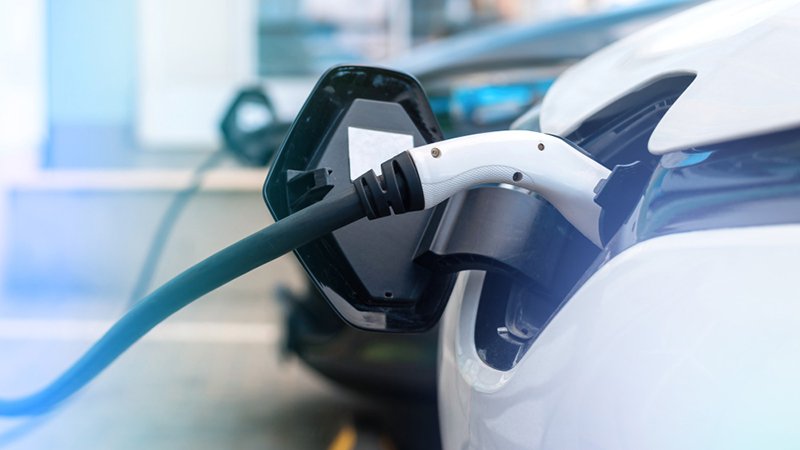
Electric Charging Station Test
Electric vehicle charging stations require rigorous testing to ensure safety, efficiency, and standard compliance across all environments and use cases.
As electric vehicles (EVs) become more prominent in the global transportation sector, the infrastructure supporting them must keep pace. One of the cornerstones of this infrastructure is the electric charging station. These stations must be reliable, safe, and efficient. To ensure this, electric charging station testing plays a vital role.
Testing not only guarantees the safety and performance of the charging units but also ensures compliance with international standards. Without rigorous testing protocols, there is a significant risk of system failures, inefficient charging, or even hazards such as electrical fires.
Core Objectives of Testing Charging Stations
Testing of electric vehicle supply equipment (EVSE) revolves around several core objectives:
- Ensuring user safety during operation
- Verifying compliance with electrical and communication standards
- Confirming mechanical durability and environmental resistance
- Checking interoperability with various EV models
- Validating energy efficiency and proper billing accuracy
These goals contribute to a charging network that is not only scalable but also trustworthy for public and private users.
Types of Charging Stations Requiring Testing
Charging stations can vary widely based on location, output power, and use cases. Each type requires different testing considerations:
Home Charging Stations
Typically operating at Level 1 or Level 2, these are installed in residential settings. Testing focuses on safety, protection against electrical faults, and compatibility with home power systems.
Public Charging Stations
Found in commercial areas, these require more extensive testing for durability, vandal-resistance, billing systems, and multi-vehicle support.
Fast Charging Stations
These high-capacity stations (DC Fast Chargers) provide rapid charging in minutes. Testing includes high-voltage safety, cooling system effectiveness, and compatibility with different EV platforms.
Fleet Charging Systems
Used by logistics or transit companies, these often involve complex load management systems. Testing must verify the integration of software, hardware, and back-end communication.
Key Aspects of Electric Charging Station Testing
Electrical Safety Testing
Safety is the most crucial factor. Charging stations must comply with global safety standards like IEC 61851 or UL 2202. Tests include:
- Ground fault protection
- Insulation resistance
- Overvoltage and undervoltage protection
- Short circuit endurance
- Leakage current monitoring
These ensure the safety of both users and the EV's onboard systems.
Communication Protocol Testing
Modern EV chargers and vehicles must “communicate” during the charging process. Protocols like OCPP (Open Charge Point Protocol) and ISO 15118 govern this interaction. Testing evaluates:
- Session initiation and termination
- Data transfer integrity
- Remote monitoring capability
- Interoperability between different EV and charger brands
Proper protocol function guarantees seamless operation across various platforms.
Environmental Testing
Charging stations are often installed outdoors. Therefore, they are exposed to various environmental factors. Environmental tests simulate:
- High and low temperature extremes
- Humidity resistance
- UV exposure and weatherproofing
- Salt spray for corrosion resistance
- Mechanical shock and vibration
These tests ensure durability in real-world conditions.
Mechanical and Structural Integrity
Physical reliability is essential for both safety and longevity. Tests assess:
- Cable strength and flexibility
- Connector durability
- Mounting and enclosure integrity
- Tamper resistance
The goal is to make sure the station can withstand years of repeated use and environmental stress.
Functional Testing
Functional tests examine whether the charger performs as expected. This includes:
- Proper power delivery based on vehicle requirements
- Start and stop controls
- Indicator lights and user interface
- Emergency stop mechanisms
- Accurate billing and metering functions
Functional tests ensure that users have a reliable and transparent charging experience.
Cybersecurity Testing
With the digitalization of EVSE, cybersecurity is increasingly important. Hackers could potentially access user data or manipulate systems. Cybersecurity testing involves:
- Network vulnerability scanning
- Authentication and encryption checks
- Software update integrity
- Data transmission security
This layer of testing is vital for the long-term trust in connected EV infrastructure.
Standardization and Global Compliance
There is a wide range of international standards that charging stations must adhere to. These include:
- IEC 61851: General requirements for EV conductive charging systems
- IEC 62196: Connectors and plugs
- ISO 15118: Communication between vehicle and grid
- UL 2202 / UL 2231: Safety standards for charging systems in North America
- OCPP: Open protocol standard for charger and central system communication
Testing laboratories use these standards to evaluate products and ensure they meet the regulatory requirements of different markets.
Lab-Based vs On-Site Testing
Lab-Based Testing
Performed under controlled conditions, lab testing allows for precise measurement and simulation of scenarios that may not be easily replicated in real-world environments. These include high-voltage performance, electrical faults, and protocol simulation.
On-Site Testing
Involves testing the installed system at its actual location. This helps assess how the charger performs with real power supply, user interaction, and environmental conditions. It's crucial before commissioning a charging station to the public.
Common Tools and Equipment Used
Technicians and engineers rely on a variety of testing tools:
- Oscilloscopes for signal analysis
- Power analyzers to measure voltage, current, and power factor
- Protocol analyzers for communication standards
- Thermal cameras for heat distribution
- Insulation testers and multimeters
Advanced software tools are also used for automated testing and logging.
The Role of Simulation in Testing
Before real-world testing, many components are simulated using digital twins or emulation software. Simulation helps to:
- Speed up development
- Identify potential failures early
- Reduce costs of prototyping
- Predict system behavior in extreme scenarios
Simulations are particularly useful when testing fast charging scenarios or load balancing in smart grid applications.
Future Trends in Charging Station Testing
As EV technology evolves, so does the testing process. Upcoming trends include:
Bidirectional Charging
Testing for Vehicle-to-Grid (V2G) functionality is becoming more common. This includes verifying whether energy can safely and efficiently flow from the vehicle back to the grid.
Wireless Charging
Inductive charging stations require a different set of tests for magnetic field exposure, alignment accuracy, and transmission efficiency.
AI and IoT Integration
Modern chargers may include AI for predictive maintenance or IoT for real-time analytics. Testing must confirm the reliability of these intelligent systems.
Modular Charging Systems
As the industry shifts to modular and scalable charging solutions, testing focuses on adaptability, interconnectivity, and seamless software updates.